
ARCHITECTS
Johannesburg architects
Redefining Educational Space: Academic Architects in Zandspruit
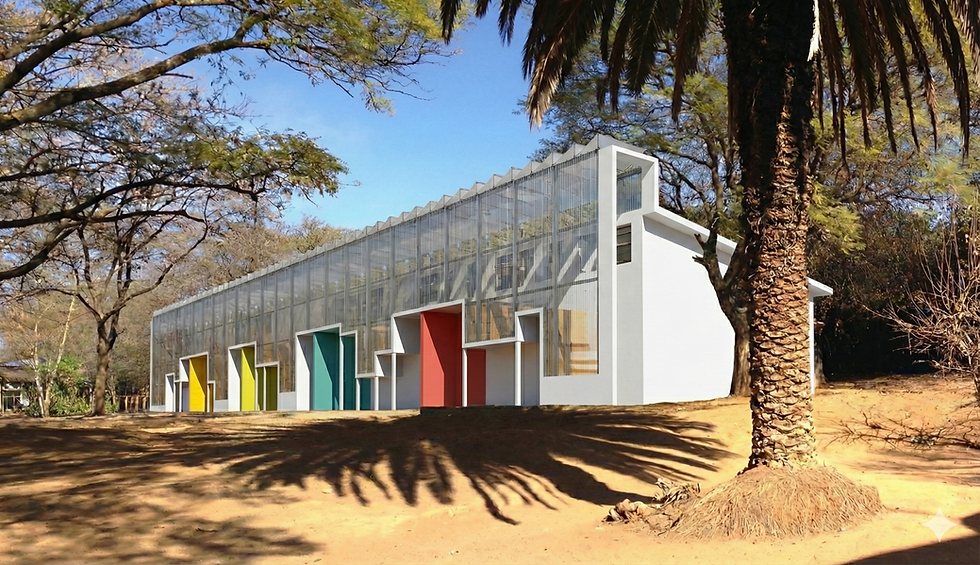
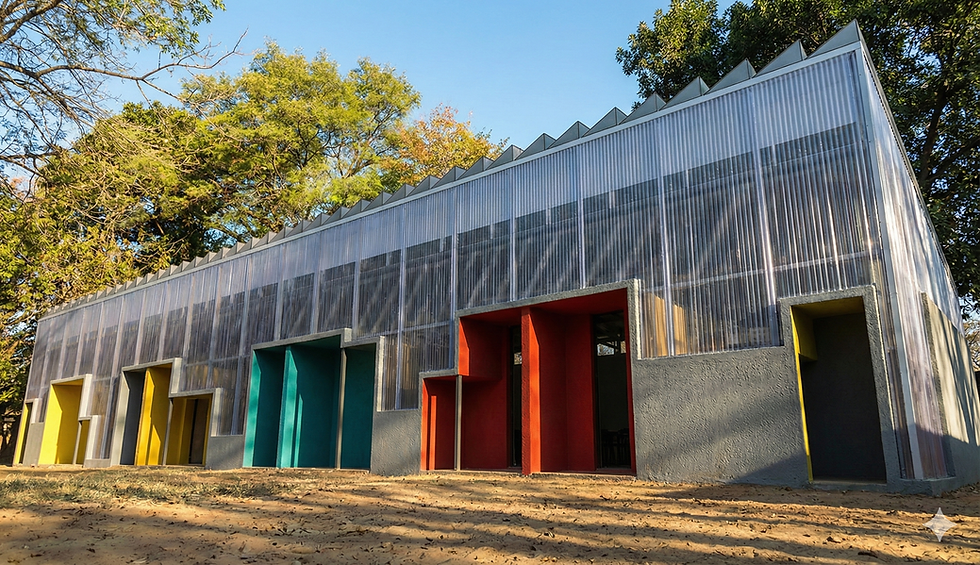
As academic architects focused on developmental infrastructure, A4AC Architects proposed a new model for the Emthonjeni Foundation School in Zandspruit. The design moves beyond basic shelter to create a 'Third Teacher' environment. By integrating passive heat stacks for natural ventilation and colorful, stepped nooks that encourage motor skill development, the building itself becomes an active participant in the children's education.
Children can use the association of color to navigate the building
Architecture for children
Architecture for children


Architecture for children

Spaces, structure and colour

A teaching space needs in-direct sunlight and not direct sun-light. In the afternoon direct western sunlight is reflected by a sunscreen. The heat build-up in the heat stack creates a natural ventilation flow.

A teaching space needs in-direct sunlight and not direct sun-light. In the morning direct eastern sunlight is blocked by a sunscreen. The play space/heat stack also acts as an insulation barrier on the eastern facade of the building. It further serves the purpose of a light channel and a natural ventilation stack. The play space/heat stack is constructed very cost effective with a steel frame and clear corrugated sheeting.

Architecture for children

Architecture for children
-
Q: What is the role of academic architects in school design?
-
A: Academic architects, like A4AC, use research-based design to improve learning outcomes. For the Emthonjeni project, this meant studying airflow (heat stacks) and child psychology to create a building that teaches.
-
-
Q: How do you cool a classroom without electricity?
-
A: As demonstrated in the Emthonjeni proposal, A4AC utilizes a "double-skin" roof and heat stacks. Hot air rises and escapes through the top vents, drawing cool air in from the bottom—a principle known as the stack effect.
-